
If you’re new to matcha, it’s easy to feel overwhelmed. There are different grades, colors, prices, and opinions everywhere. Some matcha tastes smooth and vibrant, while others are bitter or dull. The difference almost always comes down to the basics.
This guide breaks down what matcha really is, how it’s made, the different types and grades, and how to store it properly so you get the best flavor every time.
What Is Matcha?
Matcha is a powdered green tea made from specially grown tea leaves. Unlike regular green tea, where the leaves are steeped and thrown away, matcha is mixed directly into water and consumed whole.
Because you’re drinking the entire leaf, matcha has a richer flavor and a more concentrated profile than most other teas.
How Matcha Is Made
High-quality matcha goes through a very specific process.
Before harvest, tea plants are shaded from sunlight. This increases chlorophyll and gives matcha its bright green color and smooth, umami taste.
After harvesting, the leaves are steamed to stop oxidation, dried, and processed into a material called tencha. Stems and veins are removed, and the leaves are slowly ground into a fine powder using stone mills.
This slow grinding process is one reason good matcha is more expensive—it preserves flavor and texture without overheating the leaves.
Matcha Grades Explained
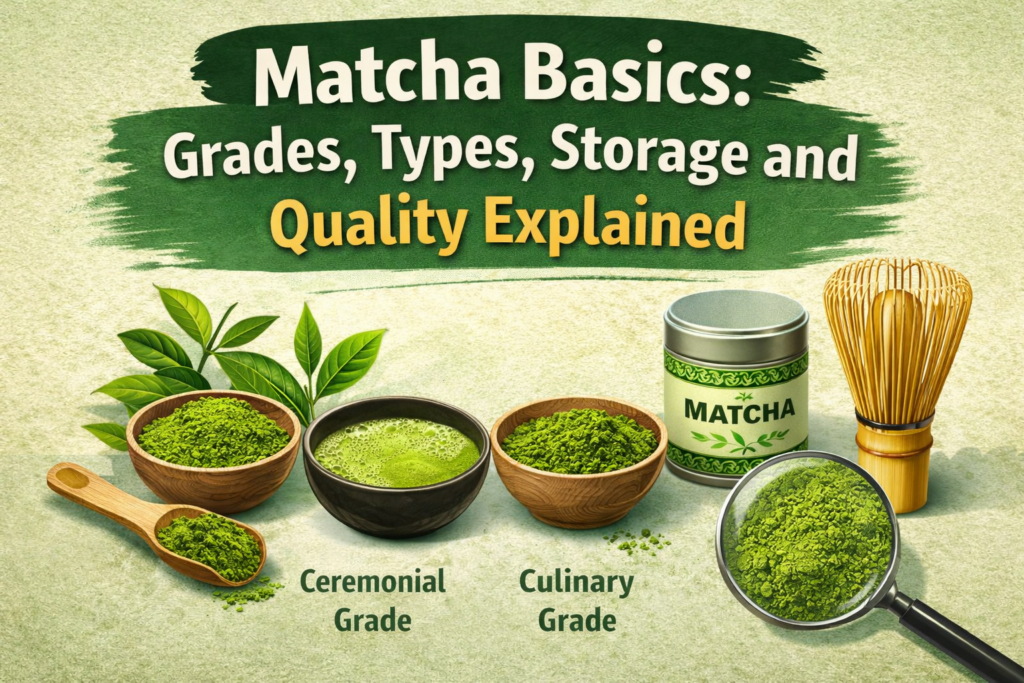
You’ll often see matcha labeled as ceremonial or culinary grade.
Ceremonial grade matcha is made from younger leaves and is meant to be enjoyed with just water. It has a brighter color, smoother texture, and a naturally sweet, umami flavor with very little bitterness.
Culinary grade matcha is slightly stronger and more robust. It’s designed to be used in lattes, smoothies, desserts, and baking, where milk or sugar is added.
Both grades have their place. The right choice depends on how you plan to use your matcha.
Ceremonial vs Culinary Matcha
Ceremonial matcha isn’t “too good” to cook with—it’s just more delicate and usually more expensive. When mixed with milk or sweeteners, many of its subtle flavors get lost.
Culinary matcha is made to hold its flavor in recipes, but it should still be bright green and fresh. If it looks brown or tastes extremely bitter, it’s likely low quality.
How to Tell If Matcha Is High Quality
Color is the first thing to look at. Good matcha should be a vibrant, bright green. Dull or yellowish-green powder is often a sign of poor quality or age.
Texture matters too. High-quality matcha is very fine and smooth. Gritty or coarse powder usually means it wasn’t ground properly.
When prepared, good matcha should taste smooth and balanced, with a gentle sweetness and very little bitterness.
How to Store Matcha Properly
Matcha is sensitive to air, light, heat, and moisture.
Once opened, it should be kept in an airtight container, away from light. Many people store matcha in the refrigerator to help preserve freshness, as long as the container is tightly sealed.
For best flavor, try to use matcha within one to two months after opening.
Why the Basics Matter
Many people think they don’t like matcha because they’ve only tried low-quality or poorly stored powder. When you understand the basics and start with good matcha, the experience is completely different.
Knowing how matcha is made, how grades work, and how to store it properly makes brewing easier and far more enjoyable.
Once you have the basics down, you can explore brewing techniques, recipes, health benefits, and tools with confidence.
Frequently Asked Questions About Matcha
Is matcha the same as green tea?
Matcha comes from the same plant as green tea, but it’s prepared differently. With matcha, the whole tea leaf is ground into a powder and consumed, while regular green tea is steeped and discarded. This gives matcha a stronger flavor and a more concentrated profile.
Why is some matcha bitter?
Bitterness usually comes from low-quality matcha, old matcha, or improper storage. High-quality matcha should taste smooth with only mild bitterness. Using very hot water can also make matcha taste harsher.
What color should good matcha be?
Good matcha should be a bright, vibrant green. Dull, yellowish, or brownish matcha is often lower quality or no longer fresh.
Do I need ceremonial grade matcha for lattes?
No. Culinary grade matcha is usually a better choice for lattes and recipes because it has a stronger flavor that holds up well with milk and sweeteners. Ceremonial matcha is best enjoyed with water only.
How long does matcha stay fresh after opening?
Once opened, matcha is best used within one to two months. Keeping it sealed in an airtight container and stored away from light helps preserve freshness.
Should matcha be stored in the refrigerator?
It can be. Refrigeration helps slow oxidation, but the container must be airtight to prevent moisture and odors from affecting the matcha.
Why is matcha more expensive than regular tea?
Matcha takes more time and labor to produce. Shade growing, removing stems and veins, and slow stone grinding all add to the cost, especially for higher-quality matcha.
Can I drink matcha every day?
Many people enjoy matcha daily. Because it contains caffeine, it’s best to pay attention to how your body responds and adjust your intake accordingly.