
Introduction
Matcha green tea is far more than a drink — it is a centuries-old ritual blending culture, health, and flavor. From traditional Japanese tea ceremonies to modern cafes, matcha is a symbol of wellness and mindfulness.
Whether you are a beginner or an enthusiast, this guide will teach you everything about brewing matcha: selecting the right grade, preparing your tools, whisking techniques, troubleshooting, and creative modern variations.
By the end of this guide, you will brew perfect matcha green tea every time, with smooth texture, vibrant green color, and rich umami flavor.
1. Understanding Matcha: Grades and Quality
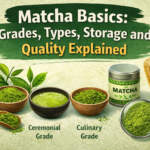
Before brewing, it’s essential to understand the different grades of matcha:
| Matcha Grade | Best For | Characteristics |
|---|---|---|
| Ceremonial | Drinking | Bright green, delicate, sweet umami flavor, finely ground, no bitterness |
| Premium | Lattes, smoothies, desserts | Slightly more bitter, versatile, still high quality |
| Culinary | Baking, cooking | Darker green, stronger flavor, more affordable |
Tips for selecting matcha:
- Color: Bright, vibrant green.
- Texture: Silky, very fine powder.
- Storage: Sealed, away from light, heat, and moisture.
- Origin: Japanese ceremonial matcha for authenticity.
2. Essential Tools for Brewing Matcha
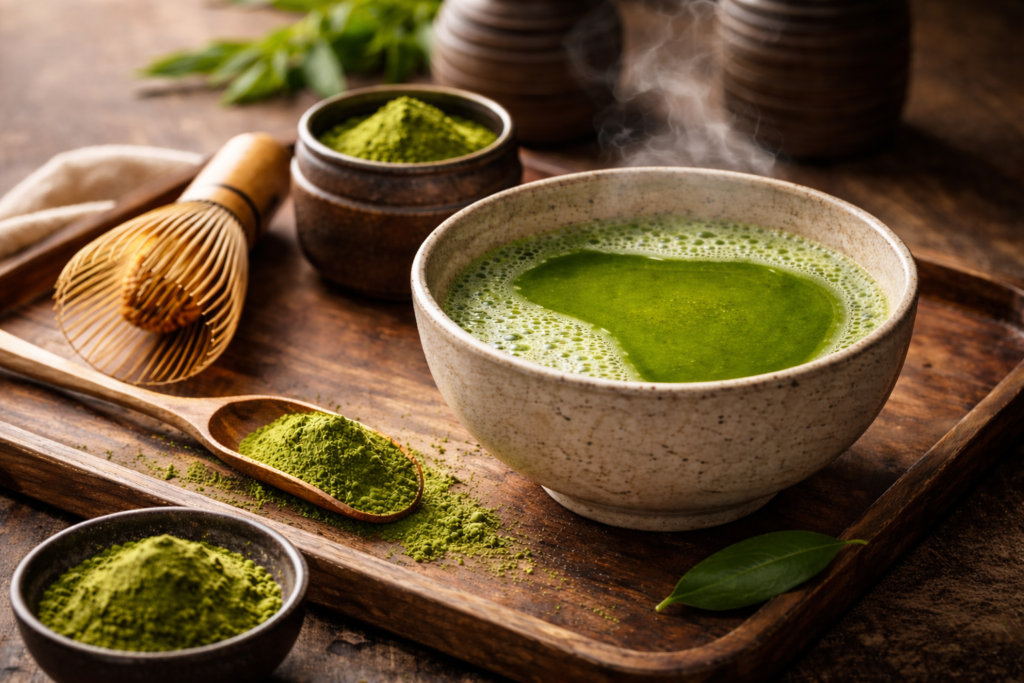
- Chawan (Tea Bowl): Wide bowl allows proper whisking.
- Chasen (Bamboo Whisk): Creates smooth frothy texture.
- Chashaku (Bamboo Scoop): For precise measuring.
- Sifter: Prevents clumps and ensures even mixing.
- Electric Frother: Modern alternative for convenience.
Traditional tools give the authentic experience, but modern alternatives work well too.
3. Step-by-Step Brewing Process
Step 1: Measure Your Matcha
Use 1–2 teaspoons (2–4 grams) per serving. For thicker matcha (koicha), use more powder with less water.
Step 2: Sift the Matcha
Sift through a fine mesh to remove clumps for smooth consistency.
Step 3: Heat the Water
- Optimal temperature: 175°F (80°C).
- Avoid boiling water; it burns the delicate leaves.
Step 4: Preheat the Bowl
Pour hot water into your chawan and discard. This warms the bowl and keeps the matcha at optimal temperature.
Step 5: Whisk the Matcha
- Add 2–3 oz (60–90 ml) hot water to the sifted matcha.
- Hold whisk vertically and whisk in rapid zig-zag motions (“M” or “W” shape).
- Froth until a thin layer of bubbles forms.
- For koicha, use less water and whisk slowly.
Avoid circular whisking; the zig-zag method produces the best froth and texture.
4. Troubleshooting Common Issues
| Problem | Cause | Solution |
|---|---|---|
| Clumpy matcha | Powder not sifted | Sift before whisking |
| Bitter taste | Water too hot or over-whisked | Use 175°F water, adjust whisking speed |
| Thin froth | Not whisked vigorously | Whisk faster in zig-zag motion |
| Weak flavor | Old matcha or too much water | Use fresh matcha, reduce water slightly |
5. Modern Brewing Variations
- Matcha Latte: Whisk matcha, then add steamed or frothed milk.
- Cold Brew Matcha: Dissolve in a little hot water, then pour cold water or milk.
- Smoothies & Desserts: Blend culinary matcha with yogurt, ice cream, or fruits.
Use ceremonial matcha for traditional drinking and culinary matcha for recipes.
6. Health Benefits of Matcha
Matcha is a superfood beverage:
- Antioxidants: Rich in EGCG for cell protection.
- Mental Clarity: L-theanine promotes calm focus.
- Energy Boost: Slow-release caffeine avoids jitters.
- Metabolism: Supports fat oxidation.
- Detoxification: Chlorophyll helps cleanse naturally.
7. Matcha Storage Guide
- Store in sealed, dark container away from light.
- Keep in cool, dry place; refrigeration optional.
- Use within 2–3 months after opening.
8. Pairing Matcha with Food
- Traditional: Wagashi (mochi, Japanese sweets).
- Modern: Almond butter toast, dark chocolate, berries.
Matcha balances sweetness, so pair lightly flavored snacks.
9. Matcha Etiquette & Tips
- Traditionally served with ceremonial gestures to show respect.
- Drink slowly, savoring aroma, color, and texture.
- Clean tools after every use to preserve quality.
10. Frequently Asked Questions (FAQ)
Q1: Can I use regular green tea instead of matcha?
A: No, matcha uses whole powdered leaves, giving more antioxidants and flavor.
Q2: Can I use boiling water for matcha?
A: No, boiling water burns delicate leaves. Use 175°F (80°C).
Q3: How do I know if my matcha is fresh?
A: Bright green color, fine texture, and sealed packaging are indicators of freshness.
Q4: What is the difference between ceremonial and culinary matcha?
A: Ceremonial is for drinking; culinary is for cooking and recipes.
Q5: Can I store matcha in the fridge?
A: Yes, ensure it’s sealed and dry. Room temperature is fine if used quickly.
Conclusion
Brewing matcha green tea is both an art and a ritual. With the right tools, techniques, and understanding of matcha grades, you can enjoy a smooth, frothy, vibrant cup every time.
Whether for traditional ceremonies or modern matcha lattes, this guide equips you to enjoy matcha to its fullest — flavor, health, and culture included.